

Quick answer: Stand them next to the bike they've got. If the balls of both feet are flat on the ground with their knees still bent, it fits. If their knees are straight and they're perched, or they're near the bike's maximum rider weight, it's finished. Everything else — bored of the top speed, bike struggling on the ground they ride — is a reason to move up, but it isn't proof.
And if the answer is "not yet", there's a far better use of a hundred pounds than a bike they don't need.
Not sure which way it falls? Send us their height and which bike they're on and we'll tell you straight — including when the honest answer is "leave it another year". Get in touch →
The four checks
Do these in the garden, in about two minutes.
1. Feet and knees. Sit them on it, both feet down. Balls of the feet flat, knees softly bent is a bike that still fits. Legs straight, hips rocking side to side to reach, or tiptoes only — they've grown out of it. This is the check that matters most, and it's the one people skip because the bike still looks right.
2. Weight. Every bike has a maximum rider weight and it's a real engineering number, not a suggestion. A child close to it will notice the bike feeling soft and slow before you do.
3. Speed. If they've been on the top setting for months and stopped asking for anything, that's boredom — and a bored rider is the one who stops going out. Worth separating from the first two checks, though: a bike that still fits and a child who's bored is sometimes a terrain problem, not a bike problem.
4. The ground they ride. A bike that was fine on a lawn can feel out of its depth once they've found a field with bumps in it. That's progress rather than a fault, and it's the most common reason a bike that technically still fits gets replaced.
Two out of four and it's worth a conversation. Check one on its own is usually enough on its own.
If it's not time yet

This is the branch nobody writes about, and it's where most families actually are. A bike that still fits but has done two hard summers doesn't need replacing. It needs a few parts.
A new battery. If the rides have got noticeably shorter, that's the battery, not the bike. It's the single biggest difference you can make to how a two-year-old bike feels, and it's a fraction of a new machine. Every model has one listed: K4, K7 Pro, K10 Pro and K22.
Tyres and inner tubes. Bald knobbles are why a bike that used to grip now slides. Cheap, and it changes the ride more than the price suggests.
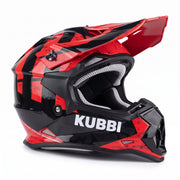
A helmet, if theirs is finished. Two reasons to replace one: it's been in a real impact, or they've grown out of it. Both are non-negotiable and both are easy to miss, because a helmet looks fine right up until it isn't. How to check the fit takes a minute.
Goggles. The cheapest upgrade to how much they enjoy riding, and the one most people leave until after the first faceful of grit. Ours are £29.99.
The next speed setting. Free. If they've been locked on mode one since you bought it and the four checks say the bike still fits, that's your upgrade.
If it is time: what actually changes
Moving up isn't just a bigger version of the same bike. Here's what you gain at each step.
| Bike | Ages | Max rider | What you gain moving up to it |
|---|---|---|---|
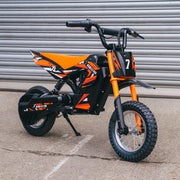
| K4 | 3–7 | 40kg | The first bike. Two speeds, 8 and 15 km/h. |
| K7 Pro | 6–10 | 60kg | A third speed setting and a real jump in top speed, a bigger frame, and up to 15km of range. |
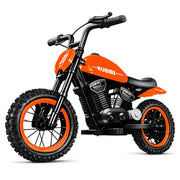
| K10 Pro | 7–12 | 90kg | Three gears, up to 23km of range, and the weight limit stops being the thing that ends it. |
| K22 | 14–18 | 120kg | A full-size machine. Eco, Cruise and Sport modes and up to 50km of range. |
Current prices are on each product page — they move, so we'd rather send you there than tell you a number that's a month old.
The K7 Pro is the step most people make, because it's where a child who learned on a K4 gets somewhere to grow into rather than another two-year bike.
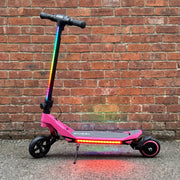
On scooters it's the same shape of decision: the S4 Pro covers ages 3–9, and the S7 Pro adds rear suspension, a bigger battery and an LED display for 7–13.
Before you commit, put their current height into the Fit Finder. It draws the child to scale beside the bike, which settles the argument faster than a spec sheet. If you want the cost-per-ride maths behind the decision, Is a Kids' Electric Bike Actually Worth It? has it.
What to do with the old one
Don't be in a hurry to get rid of it.
If there's a younger sibling, that's the answer. It's the cheapest second bike you'll ever own, and two children riding together is a different thing entirely from one child riding alone — it roughly doubles how often the bikes come out.
If there isn't, hang onto it for a season anyway. Cousins visit. Friends come round. A spare bike turns a Saturday afternoon into something for two kids instead of one.
If it's genuinely done, strip the useful bits first. A charger, a good tyre or a working battery is worth keeping as a spare for whatever comes next — and if the new bike is the same model family, some of it will fit.
Either way, give it a wash, charge the battery to about half and keep it somewhere dry. A bike that's been stored flat in a cold shed for a year is a bike with a dead battery.
Frequently asked questions
How long should a bike last before they outgrow it?
It depends far more on where they were in the size range when you bought it than on the bike. A child who started near the bottom of a range gets years; one who started near the top gets a season or two. A K4 bought for a three-year-old is a couple of years of bike, and that's what it's designed to be.
They've outgrown it but we can't stretch to the next one yet. What now?
If they can still get their feet down safely, there's no harm in another few months — it's a comfort issue rather than a safety one. The line to hold is the maximum rider weight. That one isn't flexible.
Can I just make the current bike faster?
No, and we wouldn't help you to. The speed settings exist because the frame, brakes and tyres were designed around them. If they need more, they need the next bike.
Is it worth replacing the battery on a bike they'll outgrow next year?
Usually yes, if they're still riding it. A tired battery is the main reason a bike stops getting used, and a bike that stops getting used a year early costs you more than the battery did.
Does a bigger bike mean a bigger helmet?
Not automatically — helmet size follows their head, not the bike. But it's worth measuring at the same time, because if the bike's been outgrown there's a fair chance the helmet has too.
The bottom line
Feet flat, knees bent, and well under the weight limit means the bike is fine and the money is better spent on a battery, tyres or a helmet that actually fits.
Straight legs or near the weight limit means it's done, and the next one up is where they get room to grow rather than another short stay.
Two minutes in the garden tells you which.
Kubbi supplies electric bikes and scooters to over 15,000 UK families. Everything ships from our own UK warehouse with a 12-month warranty and spare parts held in stock.