
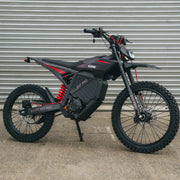
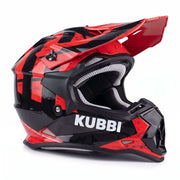

Quick answer: On private land, with the landowner's permission. That is the short version, and it is the only version that holds everywhere. Footpaths and bridleways are out. So, less obviously, are byways open to all traffic — the one category of right of way that is open to motor vehicles. None of that is as limiting as it sounds once you know where to look, and the Kubbi K47 Pro is built around it rather than against it.

This guide covers England, Wales and Scotland. It is general guidance rather than legal advice. Where something is our reading rather than a published position, we say so. If you are unsure about a particular piece of ground, the landowner and the local highway authority are the two people to ask.
The one rule everything else hangs off
Most of what gets written about this subject is a list of places you cannot go. That is the wrong way round, and it makes the whole thing sound more restrictive than it is.
The Road Traffic Act 1988 makes it an offence to drive a mechanically propelled vehicle "without lawful authority" either "on to or upon any common land, moorland or land of any other description, not being land forming part of a road", or "on any road being a footpath, bridleway or restricted byway".
Read that again and notice what it does not say. The offence is not riding off-road. The offence is riding off-road without authority. On private ground, our reading is that the authority in question is the landowner's to give — which is why permission is not a politeness. It is the thing that makes the ride lawful in the first place. Hampshire County Council makes a related point about rights of way in plainer words: "You can only drive a vehicle on a footpath, bridleway or restricted byway with the landowner's permission." The same council adds that "Driving a motorised vehicle on a public right of way without lawful consent is a criminal offence."
So the question is rarely "is this legal?" It is "whose land is this, and have they said yes?"
Public roads are the one place where the answer involves paperwork rather than permission, because road use brings in type approval, registration, a licence and insurance. That is its own subject, and we have covered it in our guide to licences and insurance for electric dirt bikes.
Where you can actually ride

Land you own. The simplest case there is. If the ground is yours and the public cannot wander onto it, you are the person giving permission.
Land someone has said you can use. In practice this is where most riding happens: a relative's paddock, a farmer's back field, a friend's bit of woodland. One caveat worth carrying with you — privately owned is not automatically the same as private for every legal purpose, because the insurance rules GOV.UK sets out reach beyond the road to a public place as well, and that phrase is wider than it sounds. Our licence and insurance guide goes through it properly. The two questions it comes down to are whether the public can get in, and whether you have the owner's yes.
Pay-and-ride tracks and practice days. There are venues all over the UK that sell a day's riding, and plenty of them now take electric machines specifically because they are quiet. Ring before you load the van, because some rule books were written around petrol bikes and have not caught up. Ask three things: do you accept electric, do you have somewhere to charge, and what cover do I need.
Off-road and enduro parks. Not to be confused with mountain-bike trail centres, which are usually pedal-only. A park that takes motorbikes will say so plainly.
Clubs. The most underrated option on this list. A local club gets you supervised ground, people who already know where to ride, and usually a better standard of riding within a month than a year on your own in a field.
How much land do you actually need?

Nobody answers this question, so here is our attempt at it.
It depends almost entirely on which mode you are in. The K47 Pro has three — 25, 45 and 80 km/h — and they are three genuinely different bikes to ride. In the lowest mode, a decent paddock with a clear perimeter is enough to spend an hour learning the machine and enjoying it. In the middle mode you want a full field, with room to get the speed off before the hedge. The top mode wants open ground and long sightlines, which in practice means several acres, a track, or somewhere designed for it.
The useful part of that is how little you need to get started. A modest piece of land is a real riding spot, not a waiting room — it covers the first two modes comfortably, which is where most riders spend most of their time anyway. The bigger ground is something to add later, and the sections above are how people find it.
Getting a yes from a landowner

People ask for permission badly, and then conclude that landowners are unfriendly. They are not. They are weighing four things, and if you answer all four unprompted you will get a yes far more often.
Cover. Most owners will ask what insurance you hold, and most organised venues will too. It is a reasonable question and the answer is worth having ready — our licence and insurance guide covers which policies actually apply to a machine like this and which ones quietly do not.
The ground. A field in February and the same field in July are different propositions, and the owner knows exactly which bits churn. Offer to stay off it when it is wet and to ride the headland rather than the middle. Ask which corner they would rather you used.
Gates and livestock. This is the one that ends arrangements. Every gate as you found it, nothing ridden near stock, and nothing ridden at all if the stock has moved since last time without checking.
Neighbours. This is where an electric machine does the arguing for you. The complaint that costs people their riding spot is almost always noise, and a quiet bike simply does not generate it. Worth mentioning up front, because most owners are picturing a two-stroke.
Get it in writing — a text message is writing — and keep it on your phone.
Green lanes and byways: the one that catches people out

Here is the bit that trips up otherwise careful people. There are four kinds of public right of way in England and Wales, and they are not interchangeable. GOV.UK sets out who each one is for.
| Where | Who it is for | Our reading, for a machine like this |
|---|---|---|
| Footpath | "walking, running, mobility scooters or powered wheelchairs" | No, unless the landowner permits it |
| Bridleway | "walking, horse riding, bicycles, mobility scooters or powered wheelchairs" | No, unless the landowner permits it |
| Restricted byway | "any transport without a motor and mobility scooters or powered wheelchairs" | No, unless the landowner permits it |
| Byway open to all traffic | "any kind of transport, including cars" | No — the vehicle has to be road legal |
| Private land, with permission | Whoever the owner allows | Yes |
The middle column quotes GOV.UK's descriptions of the four rights of way, with the byway line shortened. The last row is not a right of way and is there for comparison. The right-hand column is our reading of what all that means for an off-road electric bike, drawing on the Road Traffic Act wording above and on Hampshire County Council's guidance below — it is not a quotation from either.
The fourth row is the surprise. A byway open to all traffic — the thing most people mean by a green lane — genuinely is open to motor vehicles. It is just not open to this motor vehicle. Hampshire County Council states the requirement directly: "Vehicles must be road legal (with tax, mot, insurance etc.) and drivers hold a valid licence". An off-road electric dirt bike is not road legal, so a byway being open to a road-taxed 4x4 does not make it open to you.
The Peak District National Park Authority lists among illegal use "The riding of motorbikes, quad bikes or motor vehicles on routes not permitted for motor vehicles", alongside the reminder that it is not legal "to go on to private land unless with the landowner's permission".
One practical note from our own experience: a rough track is not necessarily a right of way at all, and a right of way is not always signed. If you want to know what a particular track is, the local highway authority is the place to ask.
Forests, commons, parks and beaches

The nation's forests. Woodland looks like the obvious place, and the publicly managed sort is one to rule out early. Forestry England, which manages the nation's forests in England, says that "All transport used in the nation's forests must comply with public highway regulations", and its guidance on electric transport describes itself as covering "electric motorbikes and other devices that are not allowed". Privately owned woodland is a completely different matter, and well worth asking about.
Common land. Beyond the Road Traffic Act, there is a second offence to be aware of on some commons. The Law of Property Act 1925 makes it an offence to, without lawful authority, drive "any carriage, cart, caravan, truck, or other vehicle" on the land that section covers — which is a specific list, including metropolitan commons, manorial waste, and commons in what were boroughs or urban districts before 1974, rather than every common in the country.
Parks, beaches and council ground. Our reading is that these are a byelaw question rather than a national one, and byelaws differ from one authority to the next, so there is no single answer we can honestly give you. In our experience the answer is almost always no — but the council that owns the ground is the authority on its own ground, and that is where to check.
Scotland works differently
If you are riding in Scotland, the public rights of way described above are an England and Wales framework, and the Scottish right of responsible access does not fill the gap for you.
The Land Reform (Scotland) Act 2003 lists what access rights do not cover, and the list includes "being on or crossing land in or with a motorised vehicle or vessel". The only exception in that paragraph is for a vehicle "constructed or adapted for use by a person who has a disability" being used by such a person.
So access rights are not the route to a legal ride in Scotland. Our reading is that it comes back to the same two options as everywhere else: the landowner's permission, or a venue that sells you a day.
Lining up your riding ground
None of this takes long. A sorted riding spot looks like four answers: you know whose land it is, you have their yes in writing, you know which part of it you are allowed on and in what weather, and you know how you are getting a 67kg bike there and back.
Most people can get all four inside a fortnight, and there is no reason it cannot happen while the bike is on its way. If you already have a field in mind, you are further along than you think.
Still choosing a machine? Our adult electric dirt bike buyer's guide covers the specs worth reading and the claims worth ignoring, and our alternatives guide covers how the K47 Pro compares with the machines most people look at first. See the K47 Pro →
Frequently asked questions
Can I ride it in my garden?
An enclosed garden you own, that the public cannot get into, is the most straightforward ground there is — our licence and insurance guide calls it the clearest case of private land. On space, a garden suits the lowest ride mode and getting familiar with the controls; a paddock or field is where the other two modes come into their own.
What about a beach?
Beaches sit under local byelaws and under a patchwork of ownership, so our reading is that there is no national answer — and in our experience the local one is usually no. The council or the estate that owns the foreshore is who to ask.
Can I ride on a disused airfield, quarry or industrial yard?
Sometimes, and some of the best riding ground in the UK is exactly this sort of place. It is still owned by someone, so our reading is that it still comes down to permission. Derelict is not the same as unowned, and "nobody will mind" is not permission.
Does permission need to be in writing?
We are not aware of any rule that says it must be. Get it in writing anyway — a saved text message takes ten seconds and settles any conversation that starts with someone walking across a field towards you.
Can I take it to a motocross track?
Usually yes, and it is the easiest way to get a proper ride without owning land. Phone first and confirm they take electric machines, because a few venues have rules written around petrol bikes.
Is a green lane ever legal for this bike?
Not as the bike is sold. Hampshire County Council's guidance is that a vehicle using a byway open to all traffic must be road legal, with a licensed driver, and an off-road electric dirt bike is not road legal. Treat green lanes as closed to you.
Is it different in Scotland?
The framework is different, but the practical route is the same. Scottish access rights exclude motorised vehicles, so our reading is that permission from the landowner, or a venue, is the way either way.
What about Northern Ireland?
This guide covers England, Wales and Scotland. If you are riding in Northern Ireland, your local council is a sensible first call before you ride anywhere that is not your own land.
What about my child's bike — same rules?
In practice the same thinking applies, since neither machine is built for the road. The parent's version of this guide is where kids can legally ride an electric dirt bike.
The bottom line
Private land with permission is not the consolation prize. It is where essentially all of this riding happens, and it is a far bigger world than it sounds like from a list of prohibitions. Fields, private woodland, old industrial ground, pay-and-ride tracks, clubs — all of it is open to you, and most of it costs a phone call.
What will not work is assuming a quiet lane or an empty-looking track is fair game. Get the permission, keep it, and the legal side of this stops being something you think about at all.
This article is general guidance on the law in England, Wales and Scotland as at 11 November 2026 and is not legal advice. Rules change, byelaws vary by area, and your own circumstances may differ — check with the landowner and the local authority before you ride. Kubbi supplies electric bikes and scooters to over 15,000 UK families. Everything ships from our own UK warehouse with a 12-month warranty and UK-based support.